
Ocean Racing World Cup
Wednesday June 25th 2008, Author: James Boyd, Location: United Kingdom
While many (mostly race organisers) condemn our sport for the lack of grip any one central governing body has over it, this situation does have the advantage of allowing new ideas to come to the fore and the free market to reign supreme.
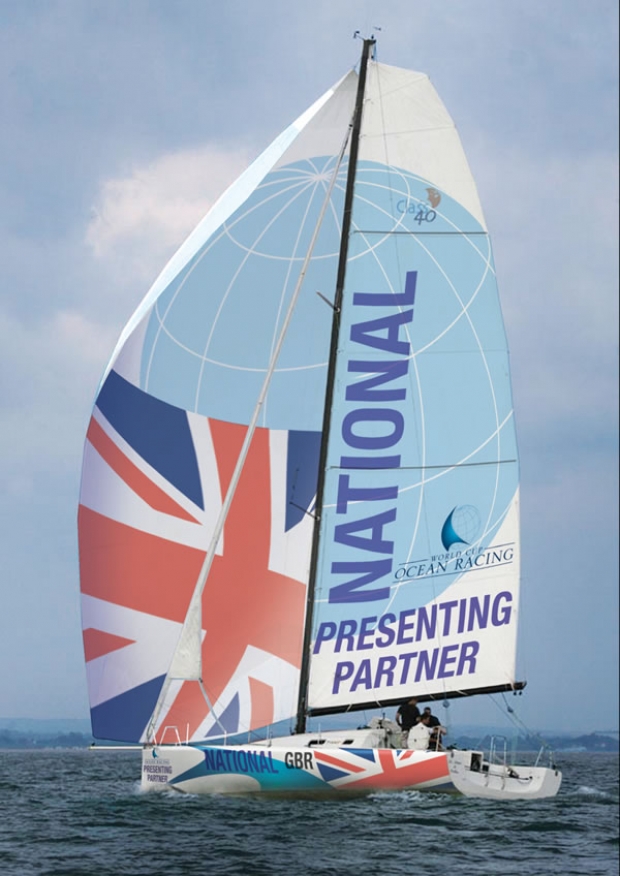
And so it was that yesterday former BT Global Challenge skipper, adventurer and marketeer, Manley Hopkinson announced details of the Ocean Racing World Cup. It should be noted that at present this doesn’t have funding and until such time as it does cannot be considered to be more than a concept. Nonetheless some of the ideas its airs are worth contemplating.
 “The plan is: national teams, identical boats in a series of races that includes inshore, offshore and ocean, using an ocean as an amphitheatre,” came the pitch yesterday from Hopkinson, who we last wrote about when he was trying to secure funds for Emma Westmacott to lead a campaign in the last Volvo Ocean Race. “So essentially the routes we have got created - we have a North Atlantic route, a South Atlantic route, East Pacific and West Pacific and Indian Ocean and variations on the them - and doing it in a contained manner so that the whole lot is completed in a couple of months. That is the general concept - and making it a World Cup, so you have this national, patriotic following as well which is important.”
The different routes notion has the potential to be confusing. In fact they would be better imagined as race areas. With the event expected to be held biennially, the first being in 2009, the idea is that the first race area might be the North Atlantic followed by the South Atlantic in 2011, Pacific in 2013, etc, according to the requirements of the title sponsor.
Within this race area the World Cup would include offshore races of a variety of lengths - from transoceanic down to round the cans with the emphasis obviously on longer distance races. Might it include existing events? “We have looked at that and the various schedules of existing races and there are some where it could well work very well,” says Hopkinson. “Newport to Bermuda for example could be one. What we need to look at is that when we create the final routing. The idea is, that where appropriate, and if it is the right standard of race, there is no reason why we cannot use that as well.”
As to how relentless racing will be over the two to three month duration of each event Hopkinson says: “There will be breaks - and the rationale for them is to do a bit of corporate sailing of course and corporate pro-am racing, as well as opportunities at the World Cup race village for sponsors and public to engage with it all.”
This race village will follow the event around. For example the North Atlantic route would certainly visit several ports in the US and Europe. Hopkinson has been working with Mike Broughton on suitable courses. “We have quite a few routes worked out that will work with the weather. The idea is that you have this race village with a massive media and corporate circus that goes with it.” So think Tour Voile, but on a large more international scale.
The World Cup is to be scored on points and Hopkinson says this will be weighted towards the end of the event to reward longevity. “That will keep the excitement right up to the end. If you have a breakage early on you are not out of the race you are still in the World Cup.”
For the proposed vessel for the Offshore Racing World Championship is an Owen Clarke-designed Class 40 one design. Are they working with the Class 40 association on this? “We have briefed them on what we intend to do,” says Hopkinson. “The rationale is that it is an established rule, in other words the seafaring capabilities of the boats has been well tested, and also the strength of the boats. They are not absolutely exotic, so their ability to withstand impact is better and it also means that a nation can enter the Class 40 races as part of their training scheme. And also potentially after the World Cup program the boats can be used by the nations within the Class 40 rules. So it adds to the greater flexibility and practicality as well as tapping into the vast amount of knowledge that is already out there on the development of those boats.”
Racing will be fully crewed - on a Class 40 this means four or five - but Hopkinson envisages national teams drawing from a pool of around 20 sailors according to the various stages of the event. If this is the case, then it is a shame that some component of the event isn’t singlehanded, given that this has demonstrated itself to be one of the fastest growing areas of the sport at present and particularly when the choice of boat clearly lends itself to this.
Interestingly under the present business plan the organisers will commission and own all the boats and these will be given to each national team, together with money to assist them in getting their sponsorship or backing sorted out. “What we are trying to do is remove all barriers to entry for each nation,” says Hopkinson. He clarifies the funding situation: “There is also a budget so that we can assist a nation with their fighting funds, but that depends upon the nation’s own sports marketing and sponsorship agreements it has. Some nations are more mature than other. There is no absolute figure. We have a budget, but it depends upon which nations come on board. Essentially you are given a boat with a maintenance schedule.”
The ideal scenario is to have one boat/team per country and Hopkinson is hoping to have 15 in the first year. However given that year one is next year, there is likely to be more flexibility over this. Ultimately Hopkinson hopes that the national authority in each country (or a yacht club in countries where the central body doesn’t deal with offshore racing) will run selection trials. “The initial idea is one, but we have to see what the take up is. You could have America 1 and America 2, or two from Britain and one from Ireland, depending upon the size of the country. The idea is that we are looking at start off with 15 nations just as a manageable starter, which gives us a race with enough volume but also gives us a starting place which is achievable. And the growth schedule when we put the business plan together is to go for an extra five boats each time.”
In terms of who is likely to do this event, Hopkinson is imagining it will be each nation’s equivalent of the Volvo RYA Keelboat program fielding a team, rather than Loick Peyron and the Gitana crew. However in fact there are to be no limitations. “We spoke to many people about that. Our gut feel is that there are some very very good and talented semi-pro and amateur sailors. What we didn’t want to say is that you have to be professional or cannot be professional. One of the rationales was that with most of the MNAs, their youth development program takes them to Olympic classes and no further. There isn’t access to ocean racing. So the idea was to use that nation’s best talent - wherever that comes from. And also some nations have a more developed professional scene than others.”
As to the name of the event, Hopkinson says that they have been through the intellectual property issues with a fine toothcomb and have got the thumbs up from FIFA to use the name. However in sailing any event with the word ‘World’ in it requires it to be sanctioned by ISAF. “We did speak to ISAF some time ago about their involvement and offered for them to come on board,” says Hopkinson. “The point is that if it works commercially, then it will benefit the whole of the sport. ISAF’s line was that they would like to approve the event first and then they may well come on board. At this stage they are not engaged in it but they are fully aware of it.”
So how far down the track are they with securing a sponsor? “We have got First Rights Marketing on board to package and sell the sponsorship deal. We have had meetings over the past six months with a number of organisations, but as yet we don’t have a sponsor signed. So the idea for getting it out there in the media was essentially to alert the sponsorship world that this is out there and it is serious. We are focussed and have a good team on board to try and sort it all out.”
And has he been speaking to any potential teams yet? “We have in a gentle way. What we haven’t done is go out there and tried to get everyone excited too early. We do need to secure the title sponsorship. We have got everything in place as far as running it is concerned and all the budgets and the understanding and some of the smaller partners are in place already with letters of intent. We haven’t gone out and said to Great Britain, France, Australia, South Africa, etc ‘right prepare your team’. We have spoken to sailors from various nations and said ‘this is on the horizon, give us your feedback and thoughts’. And they have been part of the creation of it.”
So, just to clarify again, how much would it cost to charter the boat, etc? “It wouldn’t cost you anything. If you were the one say doing the British boat, and it goes through the RYA, we will give you the boat and give you a pile of cash as well. The rationale is that then you can make a start and it will help you raise funds for the training and the other parts of the thing.” The idea is that individual team sponsors come on board cover running and campaign costs.
With all this is on offer it seems that Hopkinson and his team will be looking for a substantial sum of money from a sponsor to run their event. “The total budget is no more than a single boat in the Volvo Ocean Race. When you consider that it is pretty impressive.”
See the brochure -

What are your views on this? Email us here
Most Read
Most Commented
Comments
Businesses

Pro businesses
-
-
United Kingdom
-
United Kingdom
-
Italy
Editor's choice
Member blogs
-
 Ned Collier Wakefield: MOD70 round BarbadosWell that was intense. 12 hard fought for seconds for the win. In idyllic conditions, Tony Lawsons MOD ...
 -
 Mini Transat leg 2 reportThe second leg of the Mini Transat started on 31st October, just over a month after ...
 -
Leg 1 reportI’ve been working towards the Mini Transat now for three years. In 2013 I was part ...
Business blogs
-
 The Island Sailing Club in Cowes, Isle of Wight, is delighted that Prince Michael of Kent ...
 -
Peta Stuart-Hunt chats with the 25 year-old British solo sailor Lizzy Foreman before she sets sail ...
-
The 2015 Student Yachting World Cup (SYWoC), an ISAF-recognised event hosted and run by students for ...
Editor's Choice
All time favourites...
-
 Three legs down into Ian Walker’s
 -
 Winning all but two races at
 -
 For the first time in its
Latest Comments
Add a comment - Members log in