
Shorthanded offshore explosion
Friday November 2nd 2007, Author: James Boyd, Location: Transoceanic
|
||||||||||||||||||||||||||||||||||||||||||||||||||||||||||||||||||||||||||||||||||||||||||||||||||||||||||||||||||||||||||||||||||||||||||||||||||||||||||||||||||||||||||||||||||||||||||||||||||||||||||||||||||||||||||||||||||||||||||||||||||||||||||||||||||||||||||||||||||||||||||||||||||||||||||||||||||||||||||||||||||||||||||||||||||||||

|
||||||||||||||||||||||||||||||||||||||||||||||||||||||||||||||||||||||||||||||||||||||||||||||||||||||||||||||||||||||||||||||||||||||||||||||||||||||||||||||||||||||||||||||||||||||||||||||||||||||||||||||||||||||||||||||||||||||||||||||||||||||||||||||||||||||||||||||||||||||||||||||||||||||||||||||||||||||||||||||||||||||||||||||||||||||
|
As was the case with our Open 60 preview, the table above includes a ranking based on pace of the boat, skill and past experience of the crew and whether we think they will make it (based on the newness and preparedness of the boat).
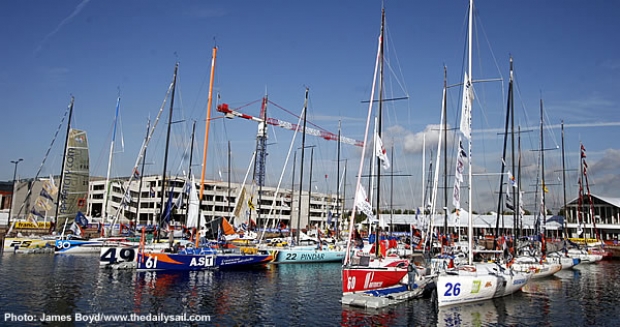
While the long line of Open 60s in Le Havre's Bassin Paul Vatine are hogging the limelight in the build-up to tomorrow's first starts of the 2007 Transat Jacques Vabre, the most impressive fleet in terms of diversity and numbers is certainly the Class 40. Over the last two years the Class 40 has seemingly spun up from nowhere but with 30 boats entered in the TJV, representing half the fleet, clearly the class is tickling a variety of people in different places. Looking at the line-up for the Transat Jacques Vabre, a number of younger competitors are hoping that the class represents a step up the career ladder en route to the IMOCA Open 60s - this includes numerous Figaro sailors taking part such as Bruno Jourdren, Marc Emig, Marc Lepesqueux, Dominique Vittet and Italy's Pietro d'Ali plus the likes of Pascal Doin, David Augeix, David Lefebvre, Nick Bubb and Tanguy de la Motte, Fujifilm skipper Alex Bennett and Pindar's Jo Royle and Alexia Barrier who have experience in the Minis. There are a large number of rock-stars who's motivation for being in the Class 40 is perhaps that it is simply good racing, without the hassle and stress of a big program. So it is that 1990 Route du Rhum winner Florence Arthaud, now 50, is sailing with Luc Poupon (brother of the 1986 winner Philippe), while also competing are Giovanni Soldini, winner of the 1998 Around Alone and famously rescuer of Isabelle Autissier, former Vendee Globe skippers Bertrand de Broc, Anne Liardet and Benoit Parnaudeau and one time Jet Services maxi-cat skipper Patrick Morvan. The class has also inspired a number of sailors from other walks of the marine industry or the racing world to come play. This includes Simon Clarke and David Lindsay, both well know boat captains in the fully crewed racing world, or Christophe Coatnoan who has been successful in RORC races or South Africans Lenjohn and Peter van der Wel, who have backgrounds in maxis. Some are amateur sailors, such as Peter Harding, who want to try their hand for the first time at shorthanded sailing within the context of one of the 'great' offshore races. Others are simply keen Corinthian shorthanded sailors of old like Jacques Fournier. The class has come on greatly since we last looked at it prior to last year's Route du Rhum. In that race there were 25 Class 40s entered, so an extra five boats may not seem like a lot, but for the TJV there were probably another ten which could have made it given more time to complete the build of their boats and qualify. The Class 40 hardware has come on greatly since the Route du Rhum. While the bulk of the fleet in that race were the original boats around which the class was designed - the Finot-Conq designed Pogo 40 and the Pierre Rolland Jumbo 40 - now the Marc Lombard-design Tunisia-built Akilaria 40 are in the major. Plus there are some potential more slippery contenders in the three new Simon Rogers-designed boats, built in Thailand, the two LNM boats designed by Olivier Philippot and the new Owen Clarkes. While some builders were complaining of not being able to build down to the 4,500kg minimum weight, this no longer seems to be an issue and several builders are getting their boats to weight in under this and are using the reverse to beef up the structure (or we hope they are). There is obviously a grand variation in hull shapes. Chines in the run aft are being used on all the new boats to varying degrees. We saw these a year ago in the wooden Julien Marin designs Chocolats Manbana and Appart City in the Route du Rhum and the chines are equally pronounced in the LNM boats and the Guillaume Verdier and Rogers designs, while it is softer on the Owen-Clarkes. Giovanni Soldini's Verdier design and the Rogers boats we suspect have the greatest beam and should therefore be the better reaching machines . Cockpit design varies greatly too. Most boats have some sort of protection at the front of the cockpit with the cabintop overhanging the front end of the cockpit. The Rogers boats have the lines running aft from the mast centrally, in a similar set-up to what the Farr Open 60s have. Perhaps the greatest variation between the boats is in their bowsprit arrangements. The Class 40s have introduced a rule this year stating that the 2m long bowsprits must remain inside the perimeter of the deck prior to the start (like it is in the Mini class) - thereby in theory minimising the risk of boat or competitors from being lanced. However many of the older boats have fixed bowsprits. So some such as the Rogers and LNM boats have what appear to be fixed bowsprit, but actually flip up - on the Rogers boats they use a halyard lock on the martingale to lock the bowsprit in place. Other boats have Mini-style arrangements with poles that rotating around the forestay and flip back beneath the guard rail at the bow. Some such as Peter Harding's 40 degrees has a J-Boat style prodder that pulls back into the bow. Others are carrying enormous spinnaker poles, some with fitting that stick into a fitting on the deck. The school seems to be out on what is the best arrangement. This is all slightly complicated by many of the new boats flying a code zero off the inboard end of their bowsprit when sailing upwind. Another variation between the boats is over the location of the water ballast. According to Class 40 rules a maximum of 750lts (kg) can be pumped up to weather - but do you put this in one tank or divide it. The Rogers boats appear to have twin ballast tanks side by side while the Akilarias have the main ballast tank 2/3rds of the way back from the bow and a smaller tank closer to the bow. See photos of the different types of boat on the following pages... page 2 - Dan Gohl and Tom Gall's Akilaria 40, Concise page 3 - probably the most tricked up Akilaria 40, Dominique Vittet's ATAO Audio Systems page 4 - one of the smartest looking 40s - Christophe Coatnoan and Christophe Lebas' JPK 40 Groupe Partouche page 5 - The Pierre Rolland-designed Jumbo 40s, Marc Lepesqueux's Siegenia and Alexis Guillaume's Merena page 6 - Chocolats Monbana , a Julien Maris-designed hard chined ply boat, one of two in the TJV page 7 - Clearly built for racing around the world - Benoit Parnadeau and J-C Caso's Jardin Bio-Pevoir a design by Alex de Beaufort of the Nacira Design Group page 8 - Peter Harding's Owen Clarke-designed Jazz Marine built 40 Degrees page 9 - The first of the Owen Clarke-designed Express 40s page 10 - The smart new Olivier Philippot-designed boats from LNM page 11 - Examples of the Finot-Conq designed Pogo 40s - one of the two 'original' Class 40s, including Jo Royle and Alexia Barrier's Pindar page 1 2 - The Simon Rogers designed 40s. page 13 - the Guillaume Verdier-designed Telecom Italia of Giovanni Soldini More on the Rogers boats and Soldini's over the next couple of weeks. |
|
|||||||||||||||||||||||||||||||||||||||||||||||||||||||||||||||||||||||||||||||||||||||||||||||||||||||||||||||||||||||||||||||||||||||||||||||||||||||||||||||||||||||||||||||||||||||||||||||||||||||||||||||||||||||||||||||||||||||||||||||||||||||||||||||||||||||||||||||||||||||||||||||||||||||||||||||||||||||||||||||||||||||||||||||||||||
Most Read
Most Commented
Comments
Businesses

Pro businesses
-
United Kingdom
-
Italy
-
-
Italy
Editor's choice
Member blogs
-
 Ned Collier Wakefield: MOD70 round BarbadosWell that was intense. 12 hard fought for seconds for the win. In idyllic conditions, Tony Lawsons MOD ...
 -
 Mini Transat leg 2 reportThe second leg of the Mini Transat started on 31st October, just over a month after ...
 -
Leg 1 reportI’ve been working towards the Mini Transat now for three years. In 2013 I was part ...
Business blogs
-
 The Island Sailing Club in Cowes, Isle of Wight, is delighted that Prince Michael of Kent ...
 -
Peta Stuart-Hunt chats with the 25 year-old British solo sailor Lizzy Foreman before she sets sail ...
-
The 2015 Student Yachting World Cup (SYWoC), an ISAF-recognised event hosted and run by students for ...
Editor's Choice
All time favourites...
-
 Three legs down into Ian Walker’s
 -
 Winning all but two races at
 -
 For the first time in its
Latest Comments
Add a comment - Members log in