
Decisions decisions
Monday December 23rd 2002, Author: James Boyd, Location: United Kingdom
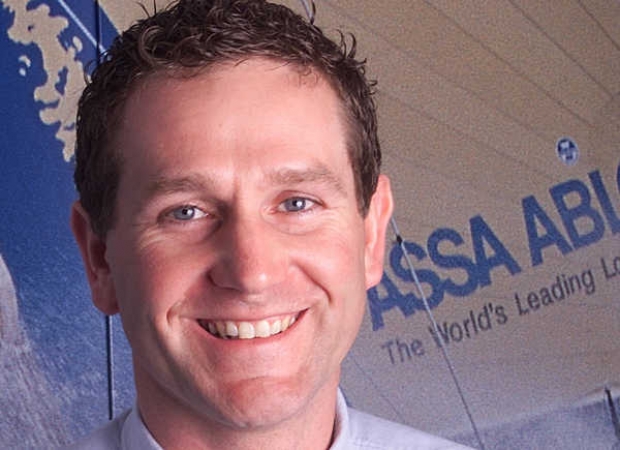
Andy Hindley has come some way since he was Pete Goss' second in command on board
Hofbrau in the first British Steel Challenge. Since then he went on to skipper
Save The Children in the subsequent 1996/7 BT Global Challenge, pursued the beginnings of a career in solo sailing before rejoining Goss as navigator on board the ill-fated Team Philips.
The 35 year old originally from Blackburn, Lancashire, is a technology junkie and when he entered the Volvo arena in a job that he describes as being "effectively Technical Operations Manager", he took to it like a duck to water. It was a role which put him in close contact with all the teams as well as requiring him to sit on the Race Committee.
In June, soon after the end of the last Volvo Ocean Race Michael Woods resigned from his position as Director of Race Operations having had a 10 year stint at the heart of the race's organisation. With the departure of stalwart former Race Director Iain Bailey-Willmott and Volvo CEO Helge Alten too, Hindley became increasingly valuable as the only person left with first hand experience of how to the nuts and holts of running the event worked. He rolled into his new position as Woods' replacement on 1 September.
The bulk of our conversation is on the topic of the format of the Volvo Ocean Race 2005-6 and what the new boat will be. Equally apparent from our conversation is just how complex this decision is and Hindley is keen to convey that although little has been emanating from Volvo Ocean Race HQ in Whiteley in recent weeks they have not been sitting on their hands.
So what they been up to? "Contrary to popular belief we haven’t been idle," says Hindley. "We’ve been looking at lots of scenarios, analysing lots of numbers and putting together ideas – as many ideas as we could think of - distilling those ideas down into sensible, commercially viable, exciting to the sailing world options. Then working plans around that."
Prior to Glenn Bourke joining as CEO they had a meeting in Auckland with several designers, spar manufacturers, sailmakers and rule measurement people and were looking at monohull and multihull options. Since then they have had a meeting back at race HQ for potential European participants.
The fundamental decision which much is riding on, including the route, is whether the event will be held in a monohull believed to be of 70-80ft LOA or an equivalent sized multihull, presumably a catamaran as opposed to the more expensive trimaran option. Hindley says that at the recent meeting the room was divided when voting on this.
At the meeting those raising money felt they could sell either provided that the commercial package was viable and in fact from a commercial point of view the choice of boat in itself didn't matter. "If you ask the people who’ve raised the money for this event in the past - when they’ve been in the board room, no one has said what type of boat is it or how long is it but we must satisfy the sailor's desire to sail this boat around the world," says Hindley. "Whatever route we choose, whatever boat we choose has to be right for them, otherwise they won't be motivated."
The general feeling amongst those who sailed Volvo Ocean 60s in the last race is they were hideous to sail, simply through the endless physical exertion having to stack and restack sails constantly. "Just sailing the boat is physically so demanding they don’t want to do it anymore," Hindley says. "You asked the sailors what they want and they'll say “I just want to sail, I don’t want to hump gear”.
Making stacking illegal is pointless because it can't be policed so it is likely that they will address this by having less sails on board. Much could also be down by making the boat lighter and so thereby reducing the weight of the sails necessary to make the boat go fast. A Volvo Ocean 60 for example weighs 13.5 tonnes whereas a fractionally smaller Open 60 is around 7-8 tonnes.
Aside from creating a more desirable boat for the crews, the primary issue needing to be addressed is the cost of campaigns. "You’ve got to justify the return for everybody," says Hindley. "Magnus Olsen summed it up when he said that if he went into a boardroom and asked for $25 million, nine times out of ten they’d bring in men with white coats asking for him to be taken away."
Length is obviously important. "Once you get over a certain length of boat whether it is multihull or monohull, when a lot of things have to be custom made, that starts pushing the cost up and the cost of the boats starts to rise exponentially and more crew are needed to sail it and more shore crew are needed to maintain it and the sails get bigger and the rigs get taller – so there is a cut-off point." In this respect the 70-80ft size appears to be optimum.
They are also trying to level the playing field, although Hindley admits that even if they chose a strict one design a richer campaign would still be more likely to win that a poorer one and cites Formula One as an example. They are simply keen to do all they can to minimise this. "If you have $25-30 million you will find a way of spending it. But what we are trying to do is to try and help people with $6, 7, 8 million to be competitive."
He expands on this: "What we’re trying to do is cut out wherever we can the fact that spending money gives you a big increase. We’re trying to get something where spending lots of money might give you a small increase. If you’re only getting a small increase is it really worth spending all that money when if you point in the boat in the wrong direction - you lose. Having said that everyone wants the fastest boat and wants that psychological advantage that their boat is quicker so if everyone does happen to go the same way then they are going to win because their boat is faster."
Probably the biggest expense of a campaign is related to how long it is fully active, and they have a cunning plan to prevent another illbruck-style four year program. "If you wanted to control some of the costs or make it more difficult to spend a lot of money then you release the rule late. But then you have to be careful not to release the rule so late that people don’t have enough time to get ready.
"If you don’t release the rule detail, you’ll still be able to raise the money without being able to design or build anything. What we have to look at is that compromise between people having enough time to design and develop and at the same time build and launch. And then there are two schools of thought there – you do a lot more development work and assume everyone learns how to sail the boat quickly or you do a short development, put your boat in the water and spend a lot of time learning how it works. Then there is the middle ground."
A one design could conceivably be another cost cutter. This was considered at the meeting but was overwhelmingly voted against by the skippers. There are after all one designs and one designs. "Would you accept boat number one out of the mould? I think 9 out of 10 sailors would say ‘no’. They’d want boat 5, 6, 7, probably not the last one – they’d be bored of building them by then. So even though there were some fantastic arguments for one design I think there are questions like that which need to be answered."
Hindley believes there are also liability issues for Volvo if they were to go down the one design route. "If it flipped over, if it rolled over, if the keel fell off, if the rig fell down - if you effectively supply all that equipment I think you will find you could possibly be found liable..."
So a one design is likely to be out and another box rule created, although it would be fascinating to see what a relatively open rule allowing advancement in rig and underwater appendages would throw up. In reality this could potentially lead to a marked difference in speed between the boats and so is expected to be ruled out.
Two boat campaigns along the lines of Assa Abloy and djuice dragons where you build a race boat and a training boat are also likely to be banned. Hindley says the America's Cup has got some fantastic rules in place with respect to this.
"There is another argument that says 'we are a very rich syndicate, we’re are going to build two boats and enter them both and then at the last minute I’m not going to sail one of them'," he says. "So there are various mechanisms in place such as a bond that can be returned if you start leg two, not withstanding the loss of a boat on leg one. There are things you can put in place to ensure it is fairer for everyone and particularly those who don’t have huge dollars, who’ve got enough money to put a team together and build a boat and take part with a chance of winning – that’s what we’re trying to achieve at the end of the day."
Remarkably between the cat and monohull options Hindley says there doesn't seem to be a great deal of difference in cost. If time in port is constant, the cat will be more expensive to build but will get round the course faster therefore the overall duration of a cat race is shorter therefore there are less salaries to be paid.
Hindley says that an 80ft state of the art catamaran would cost around $4.5 million to build whereas a 75ft equivalent monohull would be $3 million. These figures sound high until you consider that a Volvo Ocean 60 cost about $2.1 million on the water with one suit of sails for the last race. Jason Carrington and Green Marine raised the goalposts with the two Assa Abloy boats, built in female moulds and requiring no fairing, but as a result each took around 28,000 man hours to complete.
"The difference is extended sailing time versus build cost," says Hindley. "If I said that the figure being bandied about is approximately $1 million per month for the whole campaign. If you spent $9 million for the last campaign it is about $1 million per month to run everything. You’re looking at container costs being the same, staying in ports for the same amount of time. Say you’re at sea for an extra month or six weeks on a monohull, so you have to pay you whole team for six weeks longer."
However the big unknown for the catamaran option is development costs. Comparisons with French 60ft trimaran campaigns cannot really be made. "Certainly looking at the budgets for the 60ft multihulls it is not played at the same level as the Volvo guys play their game. It is nothing like it. Look at sail development programs – some boats in the last VOR built 17 mainsails. You can put restrictions on the number of sails used in the race but you can’t restrict the number of sails used in development.
"If you pick multihulls they will play the game at that level in multihulls and that cost could be enormous. One of the facts of life about the Volvo Ocean Race is that when you’ve measured your boat in you’ve measured your boat in and if it isn’t fast enough and you’ve got a pretty good team there is only one way to make the boat go faster. You can lighten it – and that’s not allowed – or it’s sail development. So it is very difficult to put a figure on it for a multihull because it has never been done before."
Even if a big multihull is more expensive than a big monohull then it is still not a clear cut decision. Maybe the catamaran options would create a bigger return on investment. "How valuable is the return by spending more money? If the incremental cost is from $1 million to $2 million but the return is $20 or 30 million then money is well spent. We have to analyse that."
Read part two of this article tomorrow on The Daily Sail
To read more on this see our Volvo Ocean Race pages ...
Most Read
Most Commented
Comments
Businesses
Pro businesses
-
United Kingdom
-
France
-
France
-
United Kingdom
Editor's choice
Member blogs
-
 Ned Collier Wakefield: MOD70 round BarbadosWell that was intense. 12 hard fought for seconds for the win. In idyllic conditions, Tony Lawsons MOD ...
 -
 Mini Transat leg 2 reportThe second leg of the Mini Transat started on 31st October, just over a month after ...
 -
Leg 1 reportI’ve been working towards the Mini Transat now for three years. In 2013 I was part ...
Business blogs
-
 The Island Sailing Club in Cowes, Isle of Wight, is delighted that Prince Michael of Kent ...
 -
Peta Stuart-Hunt chats with the 25 year-old British solo sailor Lizzy Foreman before she sets sail ...
-
The 2015 Student Yachting World Cup (SYWoC), an ISAF-recognised event hosted and run by students for ...
Editor's Choice
All time favourites...
-
 Three legs down into Ian Walker’s
 -
 Winning all but two races at
 -
 For the first time in its
Latest Comments
Add a comment - Members log in