

Audi MedCup in 2010
Tuesday January 5th 2010, Author: James Boyd, Location: United Kingdom
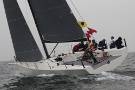
In 2010 the TP52s will have a very different look as they contest the Audi MedCup. As a first stage before they change to a wholly new rule in 2011, the boats for this season will be faster, losing their spinnaker poles in favour of a bowsprit and A-sails, changing to a flat top main with twin backstays rather than the IMS-style single backstays, plus there will be more lead on the bulb, less crew and less sails, plus several other cost-saving measures.
Several Audi MedCup competitors have been sailing recently on Matador owner Alberto Roemmers’ new Argentinian-based King Marine-built IRC 52 Lola, which in terms of its vital statistics is very similar to how the TP52s will be this year. "Upwind it was great. As a showcase of how the new boats will be - the manoeuvres are so easy, so simple - it is a fantastic boat," says Audi MedCup organiser and navigator, Nacho Postigo.
While there is the potential for up to 15 teams to be competing on the Audi MedCup this year, the organisers are expecting there to be around 12 TP52s regularly sailing in 2010, up from the ten that took part in all the regattas in 2009.
Among the hot contestants for 2010 will of course be the 2009 Audi MedCup winners, Emirates Team New Zealand, but they will face stiff competition from the new TeamOrigin entry led by Mike Sanderson. Sir Keith Mills’ America’s Cup team is using the MedCup as an opportunity to put their design, engineering and build teams through their paces prior to the 34th America’s Cup, with Juan Kouyoudmjian and his Valencia-based team having penning a new boat - this time presumably without the solid backstay that featured on his TP52 for Frank Pong, that failed to measure back in 2006.
The TeamOrigin boat is current in build at Salthouse Marine and just before Christmas Mike Sanderson updated us that the deck was off the mould, the hull mould was just about finished and they were set to start lamination of the hull just after Christmas. "The schedule is very very tight, but the design process has gone really well and we are looking forward to getting her on the water. It will be our first new sailing yacht for TEAMORIGIN so that in itself is a big day!!"
Juan was not terribly keen to talk to thedailysail about the new design as there inevitably have been some issues - the mostly probable of these is likely to be new boats now having to conform to the new ISO scantling standards. The TP52 class have done a deal with Germanischer Lloyd to be the Class Authorised Body which designers will work with to ensure new boats comply with the standards.
We understand that there was to have been another new Italian-built TP52 for a new and as yet unannounced team, but sponsorship for this was late to materialise and they are likely to be sailing a secondhand boat this season.
There is always the hope that some of the past Spanish sponsors such as Caixa Galicia, Cam, etc will return, but this seems unlikely for 2010. Other than that - all the teams that competed regularly in 2009 are expected back with the possible exception of the Bigamist team from Portugal. After years sailing old boats Pedro Mendonça’s team acquired the 2008 Judel Vrolijk-designed Platoon for the 2009 season, and in their first competitive boat, posted an exceptional performance finishing the Audi MedCup fifth overall, coming second in the final regatta, the Murcia Trophy.
While in addition to John Cook’s perennial Cristabella, British interests on the Audi MedCup circuit will of course receive a considerable boost from TeamOrigin, they may also be supplemented by Tony Langley’s Henri-Lloyd Weapon of Choice that competed in the TP52 Worlds in Palma last year and is expected to take part in a few MedCup regattas this season. Hopefully the TP52 rule heading more in the direction of the IRC will do a great deal to attract more owners like Longley into the class, giving the boats a further lease of life beyond solely the MedCup.
Modification work
Meanwhile over the winter teams are busy converting their existing boats, although wholescale changes to boats - such as replacing rigs, keel fins or even moving keel fins, rigs, chainplates or modifying hulls and decks is prohibited for reasons of cost. However if, for example, a rig is broken and must be replaced then in 2010 it will have to be built to the all-new 2011 rule. 2011 version rigs feature a higher VCG and the HS40 high modulus carbon is prohibited, although more carbon can be used in its construction, providing similar stiffness characteristics to the 2009 rigs.
So for 2010 boats are being fitted with bowsprits, replacing the spinnaker poles, jockey poles and other associated paraphernalia. Bowsprits are likely to be around 1.5m long and will be removable, as this is obviously a vulnerable area. As a result spinnaker area will increase by 12-13sqm to 260sqm.
With the addition of twin backstays, flat head mains are now permitted (several teams such as Quantum Racing were trialling them between races at the Worlds in Palma in October) where the flat head is limited to 1.25m. Maximum mainsail area has now been increased slightly, by 2.5m to 93.5m. To keep some balance in the sail plan jib size has also been upped by 1sqm to 65sqm with the girth measurements increased and one full length batten now permitted.
Sail numbers have been restricted further for 2010 - now to four jibs, four spinnakers, one main, one heavy weather jib, stormjib and trysail, with Code 0s now prohibited. This means that with training sails teams are likely to build 25 sails for a season rather than the 50 or so top teams were making two years ago. "In 2005 they were carrying six jibs and six spinnakers. Last year we reduced it to five. So we are following the trend of what the boats are carrying," explains TP52 Class Manager, Rob Whelan.
Some boats are being allowed to modify their coachroof volumes to the lower profile versions seen on the new boats launched for the 2009 season.
There have been some significant weight modifications too. Crew weight is to drop from 1,270 to 1,110kg. However a new feature of the 2010 Audi MedCup will be each boat being required to make a guest spot available during races (jumping on the Extreme 40 bandwagon). The Audi MedCup will have 20% of these spots with teams allowed to choose their own guests for the remaining 80%. Thus in practice the sailing crew weight for MedCup events will be 1,050kg plus the guest.
Given the crew weight reduction, the class were keen to prevent the boats from getting too tender. As a result the VCG has been reduced by around 10cm requiring around 150-250kg more lead to be put on the bulb depending upon the boat. For example on Synergy, Cameron Dunn reckons that they will be adding some 160kg to the bulb - of which 60-70kg will come from the 100kg they presently carry in internal ballast. Thus overall displacement has increased slightly with the limits now standing at 7600-7800kg.
The crew weight changes will effectively mean teams having to shed two or three crew, down to 12-13. From a handling point of view this is unlikely be an issue as TP52 are typically overstaffed. With poles gone, spinnaker handling will become easier, although the kites will be bigger. "We might see a bit more carnage at the bottom mark. It’ll be easier to scrimp it at the bottom," warns Cameron Dunn.
For reasons of cost, the number of practice days is also being limited. Typically the crews of the top teams train for around four days before the Tuesday practice race. According to the Audi MedCup’s Nacho Postigo to restrict this, as well as to make more of a show at each venue they visit boats will be required to be at the venue on the Friday before racing, but must remain alongside on the Saturday, allowing them to be viewed by spectators. This will effectively limit practicing at the venue to two days prior to the practice race itself.
Learning from the winners
All eyes on the Audi MedCup in 2010 will obviously be on the inter-AC team dust up between Emirates Team NZ and TeamOrigin. Before then teams will in particular be looking at what the Kiwis did right to clean up in the Audi MedCup in 2009.
"Nice package, boats sails, tactics. Just an all round ticking of boxes and they showed us how to do it. They were quick in the breeze, and they won races in light airs as well. Tactically they sailed very well. When they needed to show who was boss, they did, like Quantum last year," is the assessment of Cristabella Boat Captain, Brendan Darrer.
While Cameron Dunn reckons of the Kiwis: "As a team they have raised the bar. They sailed better than everyone all season. They started better for sure. Dean [Barker] did a fantastic job. They have mirrored what Terry did with Quantum [in 2008], where you would say that 75% of the races Quantum was punched and was able to be sail a pretty free race. In 2009 they haven’t done that and TNZ was the one that you hardly ever saw being forced off or having problems on the start line."
Dunn reckons that the level of starting was raised in 2009, although this may have been due to having had a clearer start line due to the depleted fleet.
"TNZ not only started better, but they had the ability even after a bad start to fight back into the top five. They were very smooth around the corners. Their crew work was pretty flawless and the boat wasn’t slow. And when there was a little bit of breeze they were very quick upwind. They were probably the fastest in the breeze upwind and in the light to moderate they were just fine. This fleet is about inches and feet and they were able to extract those little bits, where those teams in the middle were losing that odd foot or metre here and there and that can cost dearly coming into a top mark when you can’t quite cross anoother guy. They were also able to put the boat into places some of us wouldn’t contemplate going because they knew they had the ability and experience of how to do it."
If the Kiwis were the fastest when the breeze was up, Matador was, in Dunn’s opinion, the boat to beat in the light, particularly upwind.
Teams will also be looking at the set-up of the Emirates Team New Zealand boat - particularly having one of the pedestals aft, behind the helmsman - for getting weight aft is essential once the breeze is above 12 knots - and also their windage reducing measures, such as hidden winches, around the pit area. (See our video guided tour to the boat with boat captain Chris Reid here).
So will 2010 be simply a two horse race between the Cup teams with the rest of the fleet slogging it out for third? Brendan Darrer doesn’t agree with this. "Quantum didn’t sail as well in 2009 as they did the previous year. If they had, they could have beaten Team NZ. The second half of the season they sailed much better."
Hopefully the measures introduced by the TP52 Class Association will succeed in their aim of cutting costs. Typically building a new TP52 costs around 1.2-1.5 million Euros while secondhand values varying wildly for top boats from around 500,000 to one million Euros according to the timing of the sale and the boat’s track record. However after construction the biggest costs as ever are crew/personnel and sails - both of which have been slashed for 2010.
At present the 2010 Audi MedCup tour schedule has yet to be announced, but once again it will comprise five venues, including two in Spain and one in France, Italy and Portugal with the season culminating with a World Championship in Italy.
The GP42s will continue to race with the TP52s on the Audi MedCup. Allegedly two new GP42s - one Spanish, one Italian - were on the verge of being built for 2010, but have been put on hold. However after chartering a boat for the Worlds in Puerto Calero last autumn, Gibraltar-based Brit John Bassadone has now purchased the former Madrid and plans to compete with it this season.
Most Read
Most Commented
Comments
Businesses
Pro businesses
Editor's choice
Member blogs
-
 Ned Collier Wakefield: MOD70 round BarbadosWell that was intense. 12 hard fought for seconds for the win. In idyllic conditions, Tony Lawsons MOD ...
 -
 Mini Transat leg 2 reportThe second leg of the Mini Transat started on 31st October, just over a month after ...
 -
Leg 1 reportI’ve been working towards the Mini Transat now for three years. In 2013 I was part ...
Business blogs
-
 The Island Sailing Club in Cowes, Isle of Wight, is delighted that Prince Michael of Kent ...
 -
Peta Stuart-Hunt chats with the 25 year-old British solo sailor Lizzy Foreman before she sets sail ...
-
The 2015 Student Yachting World Cup (SYWoC), an ISAF-recognised event hosted and run by students for ...
Editor's Choice
All time favourites...
-
 Three legs down into Ian Walker’s
 -
 Winning all but two races at
 -
 For the first time in its
Latest Comments
Add a comment - Members log in