
Getting the house in order
Monday March 21st 2005, Author: James Boyd, Location: none selected
One of the many fundamental differences between the format of the 32nd America's Cup and the 31st in Auckland is that this time America's Cup Management are running the entire show whereas before the Challenger selection series (aka the Louis Vuitton Cup) and the America's Cup itself were run by two separate entities.
Unquestionably bringing both elements of many consider the 'America's Cup event' under one roof has significant benefits massively simplifying the logistics for everything from the sale of TV rights to having one set of race officials. But is this new union entirely a good thing? It should be remembered for example that the Challenger selection series is just that - a series of races to establish the most competitive team to line up against the Swiss defenders at Team Alinghi and yet this series is now being run by America's Cup Management who have been appointed to manage the 32nd America's Cup on behalf of the defending club, the Society Nautique de Geneve (ie Team Alinghi). Yes, the new Protocol, the document defining the general principles and format of the 32nd America's Cup, was written by Team Alinghi in conjunction with the 'Challenger of Record' BMW Oracle Racing and ACM are autonomous from Team Alinghi, but there still remains the potential at least for a conflict of interest.
Fighting for the rights of the Challengers this time around is a new body called the Challenger Commission. Unlike Challenger of Record Management (CORM), its predecessor in Auckland, the Challenger Commission compromises representatives from all, rather than just a select few, of the Challengers. It even includes prospective Challengers although they do not have the right to vote. Thus at the Challenger Commission meeting held in Valencia last week were representatives not just from the heavyweights such as BMW Oracle Racing, Luna Rossa and Emirates Team New Zealand, but also from the German Fresh 17 team, Sausilito Challenge with apologies for non-attendance being sent by the likes of China Team/Le Defi and Team C7 Malaysia (the potential challenge spearheaded by Australians Christine and Derek Condell).
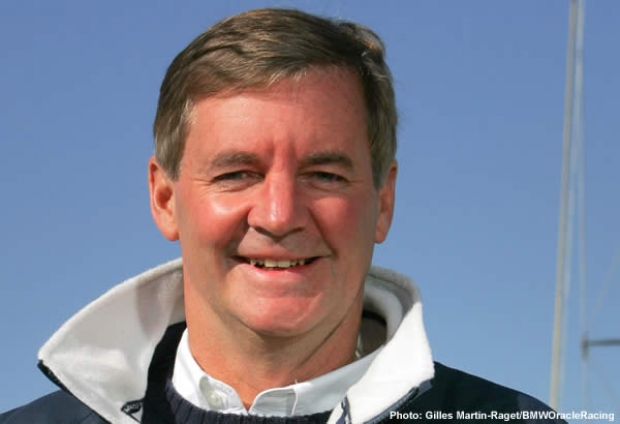
Chairman of the Challenger Commission and a well seasoned America's Cup 'player' is BMW Oracle Racing's Rules Compliance and External Affairs expert Tom Ehman who wearing his Challenge Commission hat brought us up to speed with the most salient points on their agenda.
Firstly Ehman expresses how impressed he is with his group. "It was one of the best such meetings I think I’ve been to in 25 years. There is focus and a lot of solidarity." Significantly the 32nd America's Cup is the first time there's been a challenge from Africa (in Team Shosholoza), the first involvement from the Middle East (in the form of Emirates sponsorship of Team New Zealand) and the first time there's been a prospective challenge from Malaysia. Through his Hamburg-based day job working on the sponsorship side of Formula One, Ehman says he has been to the Grand Prix in Malaysia and historically as a country they have a strong seafaring tradition, a leading international boat builder in DK Yachts while Singapore this year will host the ISAF Annual meeting and is home to an ISAF Vice President. "That part of the world is becoming more central to the sailing world," predicts Ehman.
A fundamental issue the Challenger Commission is working on at present is how the results from the Acts will count come the Challenger selection series. Both ACM and the Challenger Commission are agreed that the Acts in the build up to 2007's challenger series will be weighted, the later Acts counting for more than the earlier ones - for example 2004 Acts points X1, 2005 Acts X2m and 2006/7 Acts X5. At present there is a dispute over the significance of the Acts that boils down to ACM wanting the final results from the Acts to count for a lot while the Challenger Commission want the Acts to count for less so that when teams start the Louis Vuitton Cup the playing field is more level. "The teams want to start on an even points basis, otherwise they are worried that the challenger selection series will be over before it even starts in April 2007," says Ehman.
To give the Acts some relevance, ACM are proposing that the teams who finish in the top four should take the fast lane straight through to the quarter-finals of the challenger series. The Challenger Commission turned down this proposal six months ago says Ehman, but in February came up with their own 'San Fran Plan' using the Acts in much the same way Formula 1 teams use pre-Grand Prix time trials to get their place on the grid come race day. Thus there will be one pool for all the Challengers but the Acts (including those in 2004) will determine the pecking order or the seeding within this pool come the Challenger Series.
"The Acts count quite significantly because they will be used, just as the Protocol says, to seed the boats into the round robins and while you say ‘does it really matter if you are seeded first or last’ it matters a lot," Ehman explains. "In fact it matters if you are seeded third rather than fourth, because the higher you are up on that list the more starboard entries you get."
A team's position at the end of the Acts will also be used to judge tie breaks. "And there are a number of another perks that will accrue to the highest seeded boats," says Ehman. "You know how an America’s Cup team is - they don’t want to give away an inch or a centimetre or a kilogram of advantage."
Another advantage of the San Fran Plan, cites Ehman, is that it allows more racing for the Challengers. "Under the ACM plan, you have boats that are eliminated very quickly. Under our plan we want all the teams, even those that are going to go home, to have plenty of racing in April and May. Hence at least two big round robins, so that everyone gets plenty of action at the grand finale."
This will also be better for Challenger team sponsors. "You can say 'look we came in late, but we got started and we have got a good boat and we will be just fine and everyone will have an equal chance. But the teams that have done well have certain benefits'".
One big pool of boats rather than A and B divisions decided in the Acts will also allow all the teams to race each other. "People have said the ones everyone pays attention to are the Alinghi against One World or BMW Oracle, etc That’s not true - it’s just as true if the little team can knock off the big team. Everyone wants to race Shosholoza and if the Chinese come then everyone will want to race them. If you end up in two pools you are never going to end up racing them." Equally national pride comes into play and in Auckland one of the more poignant races was 'the spaghetti bowl' between the little Mascalzone Latino and the mighty Prada while this time it could be between Luna Rossa and +39.
Another reason to go against the divided pool round robins, says Ehman is that they result in smaller groups of boats. "It is much easier for one team to manipulate the results in that pool, the smaller the pool. What we don’t want is that in a pool one winner gets way ahead and then can start to throw races or decline to race races against certain competitors helping maybe the third best team in that pool to go ahead of the second best team and weakening the semi-finals."
The Challengers are also worried about placing too much emphasis on the Acts when most will not be racing their new boats until 2007. "ACM can talk about marketing and promotion and the Challenges are concerned about that, but that is sort of an 80-20 thing. Our 80% concern is that we have a series that trains and selects the best Challenger, one that can go against Alinghi and hopefully win. If we don’t have a series where we can develop our boats, train ourselves and then select the truly best challenger then we will have failed in our mission."
The Challenger Series itself as proposed by the San Fran Plan will compromise three round robins if there are nine or fewer challengers (at present there are nine official challengers with others such as Fresh 17, Sausalito, Team C7, China Team/Le Defi, etc prospectives) and two round robins if there are more than nine. The top four teams will then head straight for the semi-finals.
ACM and a delegation from the Challenger Commission are to get together over the next two weeks to find a solution. "I am confident the Challenger Commission plan is not only best for the Challengers but also best for the promotion for the event and the Challengers are unanimous that the so-called San Francisco Plan is the plan that they want," says Ehman. "It is simple, it is communicatable, the points are easy, the public can understand it, it will provide lots of excitement and lots of racing and it is fair."
Tomorrow we look at the other issues under discussion by the Challenger Commission
Most Read
Most Commented
Comments
Businesses

Pro businesses
Editor's choice
Member blogs
-
 Ned Collier Wakefield: MOD70 round BarbadosWell that was intense. 12 hard fought for seconds for the win. In idyllic conditions, Tony Lawsons MOD ...
 -
 Mini Transat leg 2 reportThe second leg of the Mini Transat started on 31st October, just over a month after ...
 -
Leg 1 reportI’ve been working towards the Mini Transat now for three years. In 2013 I was part ...
Business blogs
-
 The Island Sailing Club in Cowes, Isle of Wight, is delighted that Prince Michael of Kent ...
 -
Peta Stuart-Hunt chats with the 25 year-old British solo sailor Lizzy Foreman before she sets sail ...
-
The 2015 Student Yachting World Cup (SYWoC), an ISAF-recognised event hosted and run by students for ...
Editor's Choice
All time favourites...
-
 Three legs down into Ian Walker’s
 -
 Winning all but two races at
 -
 For the first time in its
Latest Comments
Add a comment - Members log in