
Telephone numbers
Tuesday January 27th 2004, Author: James Boyd, Location: United Kingdom
One of the most crucial sponsor-hunting projects underway in the UK at present is for Peter Harrison's GBR Challenge for the 2007 America's Cup. To raise the necessary sponsorship funds for the British campaign will be as much a challenge as the Cup itself for the British team.
Squaring up to this task is west London-based agency Apace Sports and Judith le Fleming who is leading the sponsorship hunt.
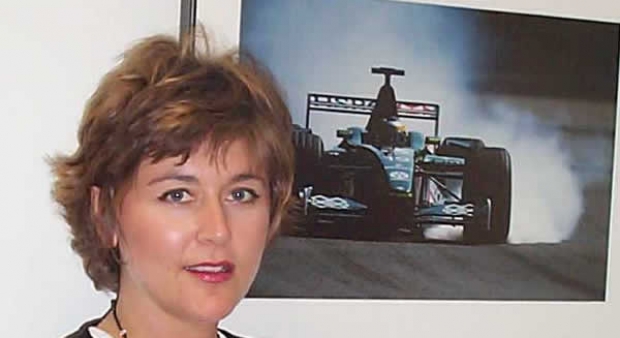
Le Fleming's credentials are impressive with a strong background in Formula 1 - she spent seven years working for Jackie Stewart, was Marketing Director at Jaguar Racing, where she raised in the order of $50 million for the team, and prior to that was at Accenture. "I have come from a marketing background into a sports background and finally into providing the same sort of services I used to as Marketing Director for a Formula 1 team on a consultancy basis for other clients," she explains. "If you have succeeded in generating money for a Formula One team, you usually have got the right tools and equipment to apply them to other sports."
Le Fleming joined Apace Sport when it was set up by former HSBC Investment Bank CEO Didier Stossell in April 2002.
So what drew her away from the glamorous world of Formula One? "If I’m being honest the reason we got together with GBR Challenge is that during my time in Formula One everyone used to talk about this thing called the America’s Cup and about the technical similarities between it and Formula 1. People were also talking about the lessons America’s Cup teams can learn commercially from Formula One teams."
With her long experience in motor sport, le Fleming and Apace felt they were well positioned to attempt this. "We said as an organisation ‘where can we take our skills, where they would be most recognised and instantly effective?’ The answer is a global sport that is under-commercialised. I know what it takes to get big deals done for teams but I also saw that in the America’s Cup there was an opportunity for us to make quite a big impact. We recognised that this was an amazing technical sport that was completely virgin territory with the exception of the brands that you saw last time around and that was nothing compared to what they should have attracted over the years. So that is what attracted us. It wasn't anything to do with sailing - I don’t know an awful lot about sailing, although I know a lot more than when I started," she says.
Le Fleming first came into contact with Peter Harrison and GBR Challenge prior to the last Louis Vuitton Cup. Their pitch centred on being able to create a commercial platform upon which GBR Challenge could survive in the long term and on the strength of this they were asked to come up with a business plan to show how. "We went to New Zealand a couple of times, saw the team in action and how other teams had positioned themselves and then we produced a plan for Peter and Leslie [Ryan] to look at - how they should organise themselves structurally on the commercial side and how the sponsorship should be positioned, who our targets would be and what should we be doing."
Apace got the contract and le Fleming began working on the GBR Challenge campaign last April based out of the Apace Sports office in Shepherds Bush or from the team's base in Cowes where she works alongside Leslie Ryan. Although she still works in other sports she reckons 80% of her time is dedicated to GBR Challenge.
One of the main changes to their approach is believing in the strengths of what they are selling. "Peter [Harrison] would often talk about raising funds and I said ‘this is not about fund raising, it is not a charity, this is not about putting a new church roof on'. This is about recognising that Peter owns an incredible international sporting property and it should be treated that way."
Fortunately with the Cup going to Switzerland and the canny Michel Bonnefous heading the all-powerful new body America's Cup Management, the commercial landscape of the America's Cup is changing and in this respect it is becoming more akin to other world-class sporting events such as Formula One or the Olympics. This is helping le Fleming's cause almost as much as the Cup itself being in Europe rather than being held on the other side of the planet.
Although America's Cup budgets seem like telephone numbers within the context of sailing with at least two teams believed to have spent more than $100 million over the last three year Cup cycle, this is small fry compared to Formula One where the likes of Ferrari and McLaren are guzzling around $200 million each year and even the next tier down are getting through around $100 million per annum.
"It is probably the same difference in the numbers that are talked about between America’s Cup teams," says le Fleming. "The difference is about how many of this you can buy and how much tank testing you can do and how much of the rest of it. For example Ferrari runs two or three wind tunnels full time, so they put it into the aerodynamic development of the car and when they do sponsor programmes and they can spend a shed load more money on updating their materials each year."
She points out that a significant difference between Formula One and the America's Cup is that roughly 50% of Formula One budgets comes from engine manufacturers. Within America's Cup campaigns it is the billionaire campaign backers who are their equivalent.
Le Fleming maintains that the telephone number sponsorships found in Formula One are out of sync with Formula One's audience. "Formula One has a huge following, but I don’t believe that you can still make the numbers stack up and that you can charge people $50 million to become a title sponsor of a Formula 1 team per year. We are looking at selling title sponsorship at a fraction of that. Realistically one tenth of what a corporate would pay for title sponsorship in a Formula 1 team is what they would need to pay for an America’s Cup team.
"To truly make a difference in Formula One you need to spend an almost obscene amount of money because the commercial landscape is so noisy. To have a voice you need to be spending serious amounts of money to buy your sponsorship and serious amounts of money on your exploitation program. With the America's Cup because it is relatively untapped commercially you really only need spend a fraction to have a share of voice."
In fact le Fleming questions the numbers put on team budgets be they Formula One or Cup campaigns. "I keep hearing about these massive amounts of money and it is the same in Formula One, but when you boil it down, the way people calculate budgets it is not necessary about money coming into the organisation. A lot is R&D and things like that, so when people say ‘you need x million dollars to run an America’s Cup campaign’, well some of that is to build your base and Peter has his base in Cowes and he has spent a lot of money getting it, so we are already ahead of the game in that way. So when people come up with these $80-100 million figures, you don’t know what is in there. But anyone who could generation that amount in pure sponsorship - that is unrealistic to say the least."
Formula One and America's Cup audiences are also very different. "With Formula One if you think about the brands that have gone into it in a massive way, they are very male and it is a very masculine environment. I honestly think where America’s Cup can steal a march on Formula One is that there is a bit more of a balance between male and female and it doesn’t alienate one from the other."
Since the end of the last Cup Peter Harrison has said that GBR Challenge will only be present at the Cup in 2007 if commercial backing is available to cover 50% of the costs. Leslie Ryan in our interview with her in December said that this money did not have to be available now - it would be adequate if it were simply a commitment to pay further down the line.
Le Fleming says that they are trying to play down this 50% figure. "We are just concentrating on the fact that we have an amazing property to sell and we will get what we believe it is worth. We are selling title sponsorship. I put a figure on what I believed it was worth given the general landscape of the America’s Cup and that was before we know the television package that has been sold - that could deliver an extra dimension that will make it worth more than I say it is worth. We have positioned it financially at the minimum based upon a 30-50% audience increase from the Auckland event."
Aside from the Cup coming to Europe and the greater commercialisation of the event the program of events in the years preceding the Cup are also helping their campaign to raise funds. Sponsors can now actively participate and get value from a Cup campaign from now right through until 2007. In addition to this le Fleming says GBR Challenge are also looking at fielding teams in the Swedish Match Tour, Cowes Week and other prominent regattas in different markets around the world enabling them to work outside of the ACM program. "It is the equivalent of running private track days for a Formula One team."
The advantage of this is that not only does it provide more for potential backers to sponsor but it enables a title sponsor to divide the cost over four years and le Fleming believes that a Cup sponsorship then becomes a palatable number which does stack up.
As we have mentioned in previous articles on sponsorship, a common misconception when trying to attract sponsors is that all they want is brand exposure. Le Fleming gives some examples of the more likely reasons companies get involved.
"You might catch an organisation that is rebranding itself in the way that HSBC came into Formula One when it was buying a lot of banks around the world rebranding them HSBC and it used Formula One as a rebranding tool, [just like Swedish lock giant Assa Alboy achieved during the Volvo Ocean Race]. There will still be those targets who we will be approaching. We have also drawn up a list of corporations, where we can do technology-in-action, where we can do product showcasing such as mobile phone companies, IT and CAD/CAM, some of big players where they can use us as a global case study.
"We have targeted some companies that provide IT to the aerospace industry where we can take their product and use it here. They are excited because it is a brand new avenue for them, which can open up opportunities in the luxury yacht market. Just at the moment we are dong a lot of work on global brands which have a heavy presence in Spain, for obvious reasons."
While this is impressive and there are certainly valuable lessons to be learned from Formula One, the proof will be in the pudding. GBR Challenge have still to hook the big bucks.
Most Read
Most Commented
Comments
Businesses


Pro businesses
-
United Kingdom
-
Italy
-
-
Netherlands
Editor's choice
Member blogs
-
 Ned Collier Wakefield: MOD70 round BarbadosWell that was intense. 12 hard fought for seconds for the win. In idyllic conditions, Tony Lawsons MOD ...
 -
 Mini Transat leg 2 reportThe second leg of the Mini Transat started on 31st October, just over a month after ...
 -
Leg 1 reportI’ve been working towards the Mini Transat now for three years. In 2013 I was part ...
Business blogs
-
 The Island Sailing Club in Cowes, Isle of Wight, is delighted that Prince Michael of Kent ...
 -
Peta Stuart-Hunt chats with the 25 year-old British solo sailor Lizzy Foreman before she sets sail ...
-
The 2015 Student Yachting World Cup (SYWoC), an ISAF-recognised event hosted and run by students for ...
Editor's Choice
All time favourites...
-
 Three legs down into Ian Walker’s
 -
 Winning all but two races at
 -
 For the first time in its
Latest Comments
Add a comment - Members log in