
The future, according to Petersson
Friday January 19th 2007, Author: Toby Heppell, Location: United Kingdom
To read part one of our interview with ISAF President, Goran Petersson, click
here
.
While there are a number of facts we do know about the future of the 2012 Olympic Games, many decisions have yet to be made about potential classes and formats and some of this requires conjecture.
First and foremost, as discussed at length in yesterday’s article we know there is definitely going to be one less medal at the Olympic Games. This, in turn, means we will see one event dropped from the Olympics. ISAF President, Goran Petersson continues: “First of all, we must drop one class. That in itself means the likelihood of changing another class will increase and then it is a matter of how much modernisation do we want?” However, he goes on to explain it is not just a simple matter of the extent to which the sport should modernise. There is also the consideration of increasing nation participation (also discussed yesterday,) as increased modernisation is likely to work against this, so this becomesa matter of balancing new high performance, thrills and spills type of boats with the more internationally established, affordable classes.
One particularly striking thing about the above statement is Petersson seems to indicate ISAF are considering the possibility of more than one class being dropped, with more new Olympic classes taking the place of the old ones. He is understandably tight lipped about this possibility when questioned directly choosing to say only. “If you look back we have never changed more than one class each time, so far as I recall. It may well change this time. Times are different but I do not yet know.” Many people have debated the possibility of starting with a clean slate this time around, picking each individual class based simply on its own merits as a boat to sail. Petersson dismisses this possibility out of hand. “There is absolutely no chance of starting with a clean slate, that would ruin the whole world organisation for sailing in the Olympic sense as a lot of nations will not change over to new classes.”
There are, clearly, a great number of possibilities as to what boats might replace any current Olympic classes but there are a few certainties already. As ISAF will not start Olympic selection with a clean slate we know probably most classes will stay. Petersson says the requirement to keep at least 35% participation from women means they are highly unlikely to remove a female class, although they may replace an event to the Olympic stage presumably with the new female high performance dinghy which is having an equipment trial in May..
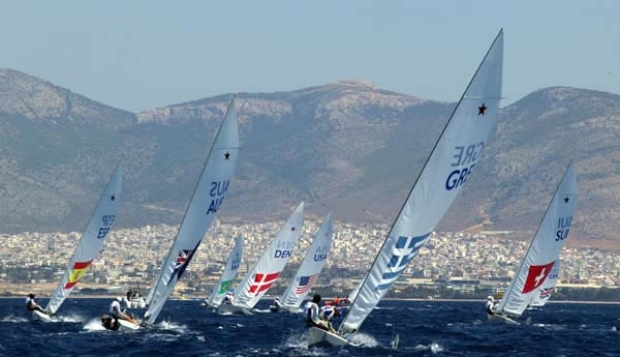
We also know the ISAF and IOC are keen to keep a significant spread of nationalities at the Olympics which would presumably see boats with a wide international appeal such as the Laser in a strong position,” confirms Petersson “What we try to do is have Olympic equipment and boats that are readily available. If you want a lot of global participation you need to have boats that are well spread around the World, of course that acts against change as you can well imagine. The Laser is the perfect example of this global spread. You can never hope to spread the Star for example to Africa. The Laser is not too expensive, the RS:X is not too expensive and for the same reason I think the 470 has worked for us.” This final statement certainly adds an interesting edge to the debate. For many, the 470 has been seen as an outdated design and a potential class to be dropped from the Olympics, but as Petersson says the affordable nature of the boat coupled with its international nature provides a very strong argument to keep it. The Star on the other hand does not have an overwhelming international following, is expensive and does not fit the exciting media criteria.
However, ISAF are only required to drop one discipline and this does not necessarily mean a class will be removed from the Games. There have been a number of rumours surrounding the 470, specifically that it might become a mixed class for men and women. This seems a good solution for ISAF for a number of reasons. Firstly it would eliminate the need to lose any classes as a whole by merging the men’s and women’s 470 into one event and secondly it could show men and women competing equally on an international stage, a relatively unique feature of our sport. According to Petersson, the IOC see it a little differently. “I do not think [it is likely] at all because the IOC is very unlikely, in my opinion, to accept any new mixed events. They want female and male events separated; they are not particularly in favour of open either. I think their preference is to stay with male and female events, nothing else. Sailing by tradition has open classes but they will not accept, in my opinion, mixed which is something else”.
The issue of open classes (the Finn, Tornado and 49er) is also one that has inspired a significant amount of debate as they are almost exclusively male oriented. Specifically, the Finn is often singled out as a preposterous example of an open class as there are few women in the world who would stand a chance of competing. “I agree the Finn is unlikely to attract a lot of female sailors but perhaps you understand the story behind the Finn being the open class. When the Laser Radial came in as the women’s singlehanded boat then it would have made no sense to keep the Laser as an open class so that became the male class. This left the Finn as the open singlehanded class because by that time the events at the Olympics had already been decided upon,” Petersson explains.
With speculation about there being more than one new class introduced to the Olympic Games for 2012 and with the emphasis being very firmly on a wholescale increase in media friendliness, there is an opportunity to explore some slightly more adventurous options. It is widely known that Petersson himself went to view the foiling International Moth class at their World Championships in Denmark last year. Foiling Moth guru Rohan Veal has been speaking to ISAF about the possibility of the Bladerider Moth – a one design class unto itself, but one which also happens to be an International Moth – becoming an Olympic class. This would be, of course, a radical venture for ISAF but it does fit the bill in a number of ways.
Firstly and perhaps most importantly the boat is a one design so there would be no development costs for the individual sailor. The startling way these boats fizz along on their foils, with their hulls airborne has a great deal of media appeal as well as providing much desired crash and burn action. In addition to this it does not require a heavy person to sail it meaning the Asian countries would not be disadvantaged. “I personally went to the Moth Worlds last year just to have a personal look at what they were like and I must say that kind of hydrofoil sailing was absolutely fantastic. That is of course just one thing we have to look at. Clearly these boats are at the very forefront of modern sailing, but before we could consider it they would need to be one design and its own class first,” Petersson states in a rather excited manner.
Beyond the subject of which classes are likely to be represented at the Olympic Games there is also the question of how much change we will see to the racing format and coverage in the coming years. Here, the focus is very much on the international media and particularly the general press and TV.
Sailing is an extremely expensive sport to televise, partly because it takes place on the water but also because it is the longest event at the Olympics.
Event length is one of the major issues sailing has in terms of coverage and many have been worried that this might result in a reduced time scale at the Games in the future. “I don’t think that will happen but there is a possibility we may cut down what is televised,” explains Petersson. “If you ask somebody what is most exciting to watch they will probably answer the 100m or 200m sprint - these are both under one minute. To try and help this we are cutting down on racing time, now there is always a target time. I don’t think we want long races. However, I do think we might want more races.” This answer seems to make sense: having as many races as possible and then televising the effective final - the medal race currently - sailing does not have to sacrifice its long held regatta tradition but is also able to maximise media exposure for what is theoretically the most important part of the event.
With the media aspect becoming so important to the modern Olympic Games, ISAF is undertaking a number of new initiatives to maximise potential coverage. Firstly there are a number of superficially small things being done. Athletes at the 2008 Olympics in Beijing will all undergo media training so they feel confident and are able to talk to the press about their sport in a professional manner. There are plans to use tracking technology in the classes to provide a better, clearer picture of who is leading at any stage in the race, something traditionally difficult for the uninitiated spectator. In addition to this ISAF are, for the first time, taking control of the media output for a number of different Olympic events. “We will, ourselves, control the media content like the television coverage from the 2007 ISAF Sailing World Championships in Cascais, Portugal. Instead of the event organizer managing the production and distribution as in the past, this is the first time ISAF will be controlling the content and the global distribution of the footage,” reveals Petersson.
Clearly these are all relatively obvious and un-invasive ways to try and make sailing more accessible to the average viewer. However, there are some other plans afoot which are distinctly more troubling for competing sailors. “We will most likely allow photographers inside the course, even if the sailors protest. We need to ensure that we use the Olympic platform to profile our sport in the best possible way.” This seems a potentially radical but understandable situation, if the media are not allowed to get up close to the boats then there is little point in them being out on the water at all. The possibility of limiting protests is also an interesting one and Petersson expands on his point. “If you talk about protests after a race it makes the results come out the next day, that is not what the media want at the top level. You can have that at club level no problem at all but at the very top level you have to consider if that is acceptable.”
There are still a great many questions to be answered about what will have to change to keep our sport a part of the Olympics. These answers are not going to be particularly quick to arrive but for the time being there is plenty to talk about. The most interesting aspect is the debate on just how far down the ‘radical’ path ISAF are willing to go. If all members agree this is the direction sailing should take at the Games, we could well see a significant change in the pipeline. Even if they do not agree our conversation with Goran Petersson would indicate ISAF is already a long way down the path towards radical change at least in their thinking.
Most Read
Most Commented
Comments
Businesses


Pro businesses
-
-
United Kingdom
-
United Kingdom
-
France
Editor's choice
Member blogs
-
 Ned Collier Wakefield: MOD70 round BarbadosWell that was intense. 12 hard fought for seconds for the win. In idyllic conditions, Tony Lawsons MOD ...
 -
 Mini Transat leg 2 reportThe second leg of the Mini Transat started on 31st October, just over a month after ...
 -
Leg 1 reportI’ve been working towards the Mini Transat now for three years. In 2013 I was part ...
Business blogs
-
 The Island Sailing Club in Cowes, Isle of Wight, is delighted that Prince Michael of Kent ...
 -
Peta Stuart-Hunt chats with the 25 year-old British solo sailor Lizzy Foreman before she sets sail ...
-
The 2015 Student Yachting World Cup (SYWoC), an ISAF-recognised event hosted and run by students for ...
Editor's Choice
All time favourites...
-
 Three legs down into Ian Walker’s
 -
 Winning all but two races at
 -
 For the first time in its
Latest Comments
Add a comment - Members log in