
Finn update
Friday April 1st 2005, Author: James Boyd, Location: United Kingdom
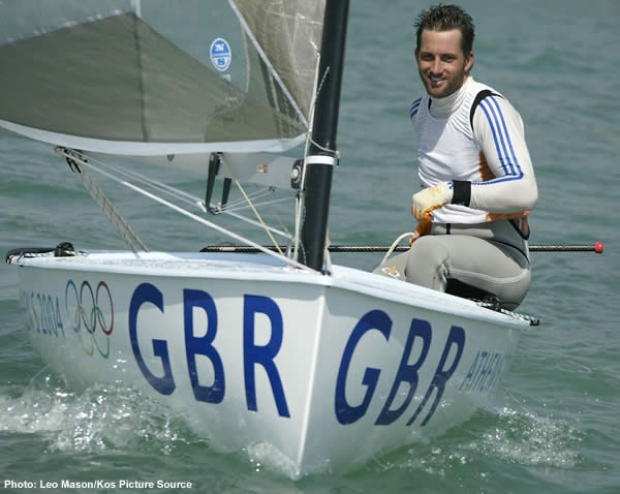
Following Ben Ainslie's emphatic victory in the Finn class at the Athens Olympics, so the Finn class in the UK has been undergoing a resurgence of interest with some top dinghy sailors turning their hand to the Olympic singlehander.
"The post-Olympic year is traditionally quite quiet, but this is probably going to be the exception to the rule," says the UK class' Phil Laycock. "I think from the momentum that Ben gave us coming out of Athens in September, we have now got more members now than we have ever had and we have got a shortage of boats because the second hand list has been cleaned out completely." Fortunately in February six new boats were delivered to ease demand.
Among the new faces entering the last are Enterprise World Champion and RS400 and OK National Champion, Nick Craig and equally successful OK, RS and Contender sailor Jim Hunt. "We set out to attract guys like them," says Laycock. "I have been working on Jim Hunt for years and he finally gave in and we managed to get him a boat for Warsash. Robert [Deaves] lent Nick his boat for the first event and borrowed my spare one for the last two and they have both ordered new ones.
"A lot of the new guys that are coming into the class are bloody good sailors like them. Simon Childs joined the fleet last year and I wouldn’t say went straight to the front, but went straight to the leading pack just as Nick and Jim did. So we all moved a notch down - but it’s good because there is more competition there".
While some of the more expensive Olympic classes seem to dwindle at national level with amateurs unable to compete with the finely trained and equipped Olympic talent, Craig, Hunt and Childs who joined the class last year are indicative of dinghy sailors who are moving into the Finn class without pretentions of going to the Games, but who simply want to join in the best competition.
"Most of us are around 40 or over," explains Laycock. "Nick is 30s and Jim Hunt is touching 40. Once you get over 30 the Olympic dream is over, but we are all still competitive sailors. And you need to be fit to sail this boat, but guys like us, six weeks before the Nationals, we’ll have a bit of a burst in the gym and we can get there in reasonable physical state. There are probably a dozen guys who can beat the Squad guys periodically. That is one of the reasons why we go I suppose."
No article about the Finn class is complete without some comment about Ainslie who of course is now in Auckland training with Emirates Team New Zealand. Will he return to the Finn? "The rumours I’d heard is that he’s kept his Finn and come 2006 he will have a go," says Laycock. "For the Gold Cup this year the dates were messed up and so we have had to move it back to after the selection date for 2012. So Ben can now do the Worlds this year. I am told he is already 10kg lighter than he was in Athens..."
Although some of the administration for the Gold Cup have been less than perfect, with the Gold Cup having to be moved from early June to mid-September, their offer to hold the class' World Championship has been unprecidented. "Uniquely Moscow are supplying all the kits. They have bought 100 Finns with 100 masts and 200 sails and they are supplying it to all the sailors. The plan is that once it is over they are going to spread all the kit out around Russia," says Laycock. This move is clearly designed to aid Moscow's chances of winning the bid to stage the 2012 Olympiad.
However the Gold Cup date change has resulted in this year's UK Nationals having to be moved from September to June, to be held in Christchurch. Numbers are expected to be up at the Nationals. Last year with the Olympic squad away in Athens, 28 boats showed, while typically it has been 33-35 before this. In Christchurch Laycock hopes 40 will compete.
Aside from the arrival of new dinghy veterans, all the Olympic squad apart from Ainslie will remain active led by the pretender to the throne, Andrew 'Bart' Simpson. "They reckon Bart must be the most unlikely sailor in the history of the Olympics," says Laycock. "He was the nearly man in the Laser. He was the nearly man in the Finns. He has just brought a new boat, so we think he is around for another campaign..."
Laycock also highly rates the young giant Chris Brittle. "Has probably got more potential than anybody. He had a shoulder injury that was bad last year, so he had 12-18 months out. Physically he has all the attributes - he’s just awesome. At the Concept 2 rowing world championship he went to as part of his rehabilitation last year - he posted the fastest ever time in the world for a non-rower. That’s just Chris Brittle."
Fresh Olympic-level talent is also joining the class from the Laser such as Ed Wright, Matt Howard and Ed Greig. "Ed Wright was one of the guys pushing Paul Goodison in the Laser," says Laycock. "He jumped into a competitive Finn at the first qualifiers and he was straight on the pace, right there. He's still a bit light, but it was all fairly light wind sailing at the end of last year. I would be very interested to see where he is in a year’s time.
"Matt Howard is a bloody good sailor that wins everything on the UK circuit but hasn’t yet converted that into international results. Ed Greig was national champion last year but is struggling with full time sailing because of his studies. They are all good sailors, but none of them has proved they are in the same class as Ben or Bart. You have to bet on Ben or Bart if they are going to do it again."
In terms of gear, the Finn has remained fairly static since carbon wing section masts were introduced in the mid-1990s. However technology is always improving and there is now greater knowledge when it comes to tailoring the rig to the sailor's requirements and their weight. "Somehow the numbers got out for the mast Ben used to win the Olympics and a batch of eight have just come over from Switzerland - pretty much clones of Ben’s mast," says Laycock. "It wasn’t a surprisingly stiff mast, but Ben isn’t physically in the same league as some of the other sailors. David Barrows, the Irish guy, is 6ft 5in and 110kg and makes Chris Brittle look pretty weedy. On the windy day in Athens you could see the difference in stiffness between Ben’s mast which is quite curved and David Burrow’s which is a lot stiffer. Basically the big guys can sail with more power. Ben I think got the optimum and got it right for him."
Other trials have been made with fibreglass boom - gaining no noticable advantage - and more recently carbon booms. "Back in the 1990s they tried an all-carbon boat, but it was too stiff and it wouldn’t go through the waves," says Laycock. "While they want the stiffness in certain places, they need it to flex to go through the waves. The carbon boat was hopeless going upwind."
Ainslie's race winning clear coat deck, showing the laminate in its full glory, we are also told is purely aesthetic and blue is now the Gold medallist's choice of colour. "The disadvantage is that you are probably easier to spot because you probably get more reflection off the deck. Gun metal grey or blue like Ben’s is probably more conservative and blends in a bit better," says Laycock.
Most Read
Most Commented
Comments
Businesses

Pro businesses
-
Italy
-
United Kingdom
-
-
Editor's choice
Member blogs
-
 Ned Collier Wakefield: MOD70 round BarbadosWell that was intense. 12 hard fought for seconds for the win. In idyllic conditions, Tony Lawsons MOD ...
 -
 Mini Transat leg 2 reportThe second leg of the Mini Transat started on 31st October, just over a month after ...
 -
Leg 1 reportI’ve been working towards the Mini Transat now for three years. In 2013 I was part ...
Business blogs
-
 The Island Sailing Club in Cowes, Isle of Wight, is delighted that Prince Michael of Kent ...
 -
Peta Stuart-Hunt chats with the 25 year-old British solo sailor Lizzy Foreman before she sets sail ...
-
The 2015 Student Yachting World Cup (SYWoC), an ISAF-recognised event hosted and run by students for ...
Editor's Choice
All time favourites...
-
 Three legs down into Ian Walker’s
 -
 Winning all but two races at
 -
 For the first time in its
Latest Comments
Add a comment - Members log in